Why Brainwave State Matters for Studying
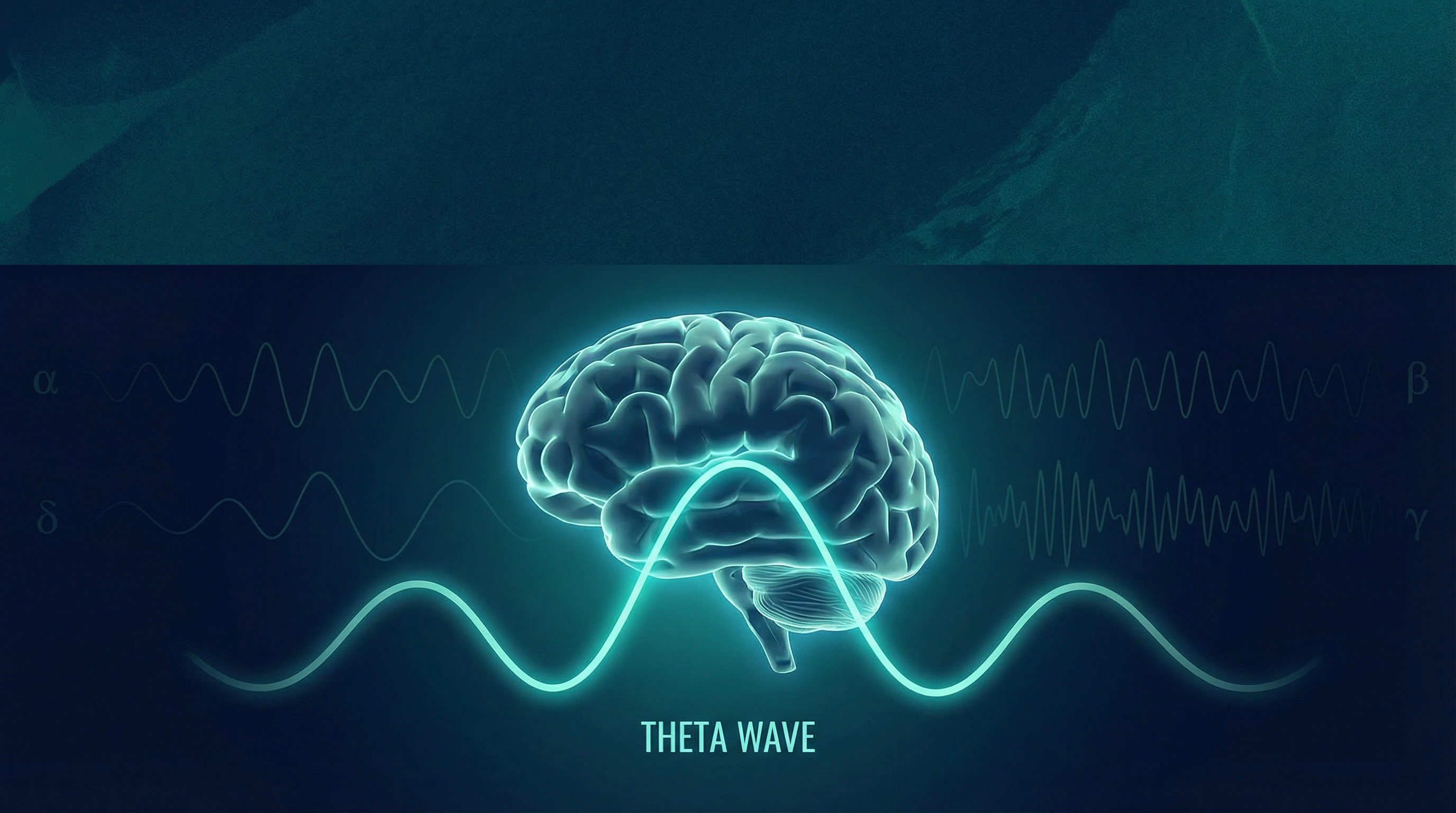
Your brain is never in a single brainwave state — at any moment, multiple frequencies are active across different regions. What changes is which frequency dominates, and dominant frequency has measurable effects on everything from working memory capacity to hippocampal encoding efficiency to cortisol levels.
The discovery that different cognitive functions are associated with different dominant frequencies is one of the most practically useful findings in cognitive neuroscience. It means that the quality of your study session depends not just on the material, the method, and the time spent — but on the brain's electrical state while all of that is happening.
EEG research going back to the 1980s has consistently shown that students in high-beta dominant states (13–30 Hz) — characteristic of stress, anxiety, and scattered attention — show significantly poorer encoding on subsequent memory tests compared to students who study in alpha-dominant (8–13 Hz) or theta-dominant (4–8 Hz) states. The difference can be substantial: one study in International Journal of Psychophysiology found a 23% improvement in declarative memory recall in students who learned material while in alpha-dominant versus beta-dominant states.
Is a Foggy Brain Holding You Back?
Download the free Brain Fog Fix Guide and discover the 12-minute audio technique that thousands use to restore mental clarity — no supplements, no meditation required.
Get the Free Guide →The Problem: Most Students Study in Beta
High-beta dominance (15–30 Hz) is the signature state of stress, anxiety, and cognitive overload. It characterises most students' typical study experience: deadline pressure, background worry, caffeine jitters, notification anxiety, and the general stress of academic life all drive brainwave activity upward into the high-beta range.
High beta is not inherently bad. Low-to-mid beta is associated with alert, focused attention and is well-suited to analytical tasks. But high beta — the frequency of acute stress — is actively antagonistic to the two states that support learning most: alpha and theta.
When cortisol is elevated and the brain is running in high-beta, the hippocampus (which encodes new memories) shows reduced connectivity with the prefrontal cortex, reduced theta power in its own oscillatory activity, and decreased sensitivity to the long-term potentiation signals that physically strengthen synaptic connections. In short: your memory hardware is running in an impaired mode.
This is why a student can spend four hours studying under stress and retain far less than a student who spends 90 minutes in a calm, alpha-dominant state followed by a theta-primed deep encoding session. The first student was fighting their brain's own chemistry. The second was working with it.
Alpha Waves (8–13 Hz): Calm, Receptive Attention
Alpha waves, oscillating at 8–13 cycles per second, emerge when you are relaxed but awake — eyes closed, breathing slowly, mind gently at rest. They represent a kind of alert idling: the brain is ready to process but not yet engaged with demanding input.
What Alpha Does for Learning
For studying, alpha serves two key functions:
1. Receptive attention for reading and reviewing. When alpha is dominant, the brain is in a low-arousal, open processing mode that is well suited to absorbing and reviewing familiar or moderately complex material. The stress-narrowing of attention that characterises high-beta is absent, so the brain can take in information broadly rather than through a threat-filtered lens. This makes alpha ideal for the initial phase of a study session — reading, reviewing notes, absorbing lecture content.
2. Memory consolidation in rest periods. A 2012 study in Psychological Science found that 10 minutes of eyes-closed rest (a naturally alpha-dominant state) immediately after learning improved memory recall by 10–40% compared to continuing immediately with new material. The alpha state appears to allow the hippocampus to replay and consolidate recent experiences before new input competes with them. This is called the "wakeful rest consolidation effect" and it has direct implications for study session design: brief alpha-state rest periods between learning blocks improve total retention.
Alpha as the Gateway to Theta
Alpha is also the bridge state. When alpha dominance is established — through meditation, slow breathing, or audio entrainment — the brain is positioned to descend naturally into theta. Most effective meditations and all good audio entrainment protocols move through alpha first on the way to theta, because jumping directly from high-beta to theta is neurologically difficult. The sequence is: high-beta → mid-beta → alpha → theta.
Theta Waves (4–8 Hz): Deep Memory Encoding
Theta waves (4–8 Hz) are the brainwave frequency most strongly associated with deep memory formation. This is not a soft claim — it is one of the most replicated findings in cognitive neuroscience.
The hippocampus, which serves as the brain's primary memory encoding structure, generates its own intrinsic theta rhythm. When hippocampal theta power is elevated, the conditions for long-term potentiation (LTP) — the synaptic strengthening mechanism that physically embeds new memories — are optimal. The theta oscillation coordinates the precise timing of neural firing that makes LTP most likely to occur.
Theta and the Hippocampus
Research by Nobel Prize-winner John O'Keefe and others established that theta oscillations in the hippocampus are not merely correlated with learning — they appear to be mechanistically necessary for it. When hippocampal theta is pharmacologically suppressed in animal studies, spatial and declarative memory formation is severely impaired. When theta is preserved or enhanced, memory encoding is robust.
In human EEG studies, higher theta power during the encoding of a word, concept, or face predicts better recall of that item on subsequent tests — a relationship that holds across dozens of studies and multiple research groups. The theta state is, in the most literal sense, your brain's learning mode.
Theta and New Material
Theta is particularly associated with encoding genuinely new information — material you have not encountered before and are trying to commit to long-term memory. This distinguishes it from alpha, which is better suited to reviewing and consolidating familiar material. When you are working through new concepts for the first time, the goal should be to establish theta dominance in the hippocampal system before and during that exposure.
For a deep scientific exploration of theta waves, how they relate to creativity and flow in addition to memory, and the research behind theta entrainment, the essential read is our brainwave science article on what theta waves are and how to access them.
Alpha vs Theta: Which to Use at Each Learning Phase
| Study Phase | Optimal Brainwave State | Why |
|---|---|---|
| Pre-session brain priming | Alpha → Theta transition | Reduces cortisol, opens hippocampal encoding, establishes receptive state |
| Reading new material | Alpha | Open, receptive attention; less high-beta filtering; better comprehension |
| Encoding genuinely new information | Theta | Hippocampal theta enhances LTP; optimal for first-pass deep encoding |
| Spaced repetition review | Alpha | Calm, focused retrieval; reduces interference during recall practice |
| Between-session rest periods | Alpha (eyes closed) | Wakeful rest consolidation — hippocampus replays recent session |
| Creative synthesis / problem-solving | Theta | Default mode network-executive overlap; associative thinking across knowledge domains |
| Pre-exam cortisol lowering | Alpha → Theta | Restores prefrontal access to encoded material by reducing cortisol |
How to Enter Alpha for Study Sessions
Alpha is the easier target — most people can reach a reliable alpha state within 5–10 minutes using basic techniques:
- Eyes-closed breathing: Slow your exhale to be longer than your inhale (4 counts in, 6 counts out). Three to five minutes of this consistently produces alpha dominance as the parasympathetic system activates.
- Brief mindfulness: Direct gentle attention to the sensation of breathing for 5–10 minutes. The narrowing of attentional scope suppresses high-beta and allows alpha to emerge.
- Alpha audio entrainment: Binaural beats set to the alpha range (8–12 Hz) produce measurable alpha increases within 10 minutes via the frequency following response. This is useful when you need a reliable, consistent method rather than depending on a practice you may not yet have cultivated.
- Brief physical stillness: Simply sitting quietly, away from screens, for 10 minutes allows the high-beta arousal of daily life to naturally dissipate into alpha.
How to Enter Theta for Deep Encoding
Theta is less accessible than alpha for most people without a practice or tool to support it. The spontaneous theta states that occur naturally — the hypnagogic state before sleep, deep meditation, flow states during absorbing work — are powerful but not reliably schedulable.
The practical approaches for deliberate theta access:
- Theta audio entrainment: Binaural beats in the theta range (4–7 Hz), listened to through headphones for 10–20 minutes, produce measurable theta power increases in EEG studies. This is the most reliable and reproducible method for most people. The alpha foundation helps: if you establish alpha first through breathing or a brief eyes-closed rest, the shift into theta comes more easily.
- Experienced meditation: Practitioners with consistent sitting practice typically achieve theta within minutes of beginning. For most students without an existing practice, this route takes months to develop but is worth pursuing long-term.
- Pre-sleep review: The hypnagogic state (the 5–15 minutes before sleep when theta naturally dominates) is a naturally occurring theta window. Reviewing material in the 30–60 minutes before bed and then entering sleep immediately benefits from the hypnagogic theta for consolidation.
The Audio Bridge: Engineering Your Study State
For students who want a reliable, repeatable method for entering the optimal brainwave state for studying — without spending months developing a meditation practice — purpose-built audio entrainment is the most accessible tool available.
The Genius Song is a 12-minute professionally engineered theta brainwave audio program that moves through the alpha-to-theta transition via binaural beat entrainment. Unlike YouTube binaural beats (which are often compressed, frequency-imprecise, or embedded in distracting music), a professionally produced entrainment track is engineered to precise specifications with uncompressed audio quality.
For studying specifically, the protocol is: put on headphones, use The Genius Song for 12 minutes immediately before your study block, and begin studying while still in the alpha-theta state. The benefit window — the period of elevated theta power — persists for 15–30 minutes after the session ends, giving you a primed encoding environment for the beginning of your study block when the material is freshest.
The Genius Song — Engineer Your Study Brain State
A 12-minute theta brainwave audio program that transitions your brain from stressed beta into the alpha-theta learning state. Use it before every study block for measurably better encoding. $39 one-time · Lifetime access · 90-day money-back guarantee via ClickBank.
Click here to try The Genius Song →Affiliate disclosure: This is an affiliate link. I may earn a commission at no extra cost to you.
The complete brainwave science — covering all five frequencies and the full research base on entrainment — is at our hub article: Brainwaves Explained: Alpha, Beta, Theta, Delta, Gamma. And for the specific role of spaced repetition combined with brainwave state optimisation, see: Spaced Repetition and Brainwaves: Why Anki Works Better in Theta.
Free Resource: The Student Brain Performance Guide
Covers the five science-backed study techniques most students ignore — including the brainwave state protocol for maximising every study session. Free download.
Download the Free Guide →