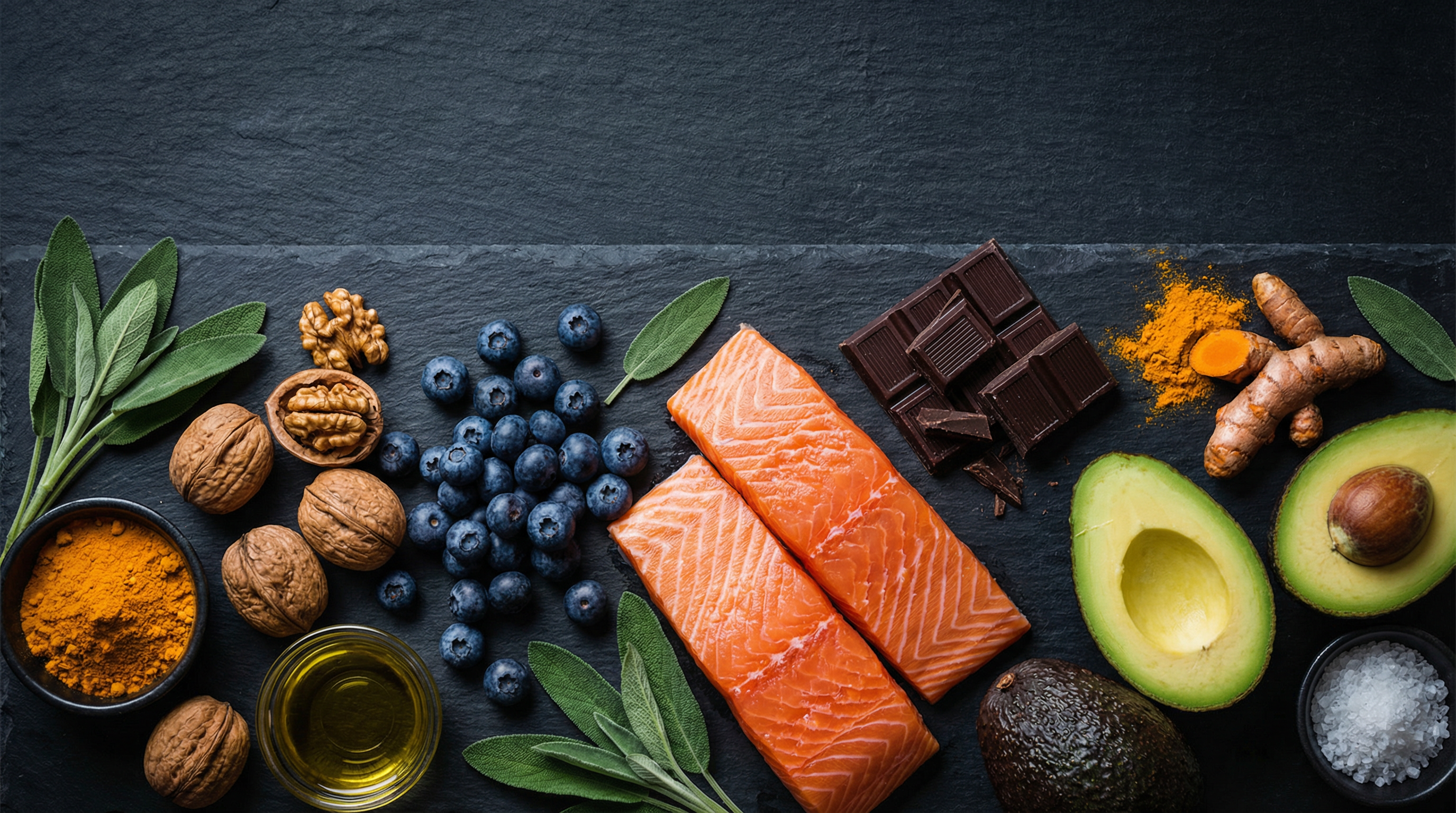

Why BDNF Is the Key to Memory Improvement
Before diving into specific foods, it's worth understanding why BDNF matters so profoundly for memory. BDNF is not just one factor among many — it is the primary molecular signal that enables long-term potentiation (LTP), the cellular mechanism by which memories are physically inscribed in the brain. Without adequate BDNF, neurons cannot form the new synaptic connections that encode lasting memories, and existing connections gradually weaken.
After 40, BDNF production declines naturally. Research published in Nature Reviews Neuroscience links falling BDNF levels to the memory changes adults notice in this decade — the tip-of-the-tongue moments, the slower recall, the difficulty retaining new information. The encouraging flip side: BDNF responds remarkably well to lifestyle interventions, including specific dietary choices.
For the complete scientific picture of what BDNF is and does, see our dedicated article on BDNF and brain health. This article focuses specifically on the dietary dimension.
Is a Foggy Brain Holding You Back?
Download the free Brain Fog Fix Guide and discover the 12-minute audio technique that thousands use to restore mental clarity — no supplements, no meditation required.
Get the Free Guide →The Top BDNF-Boosting Foods: What the Research Shows
1. Blueberries and Berry Anthocyanins
Blueberries are arguably the single most well-researched food for brain health, and BDNF is a central mechanism. The anthocyanins — the pigments responsible for their blue-purple colour — cross the blood-brain barrier and have been shown to increase BDNF expression in the hippocampus directly. A landmark study from the USDA Human Nutrition Research Center on Aging at Tufts University found that blueberry supplementation reversed age-related deficits in hippocampal-dependent learning and spatial working memory in older rodents — effects mediated through BDNF signalling.
Human studies have replicated these findings in older adults: daily blueberry supplementation over 12 weeks significantly improved memory performance and increased activation in brain regions involved in memory encoding. Target: 1 cup (150g) of fresh or frozen blueberries daily. Other berries — blackberries, strawberries, raspberries — contain similar anthocyanin profiles and show comparable effects.
2. Fatty Fish (Salmon, Sardines, Mackerel)
Omega-3 fatty acids — specifically DHA (docosahexaenoic acid) and EPA (eicosapentaenoic acid) — are structurally essential for the brain. DHA constitutes approximately 40% of the polyunsaturated fatty acids in the brain, and it plays a direct role in BDNF signalling and membrane fluidity at synapses. Low DHA is one of the most consistent dietary correlates of cognitive decline.
Multiple clinical trials show that omega-3 supplementation increases BDNF levels in older adults and improves memory performance, particularly episodic memory — the type most affected by normal aging. The effect is more pronounced when dietary omega-3 intake is low to begin with, which is true for the majority of adults in Western countries.
Target: 2–3 servings of fatty fish per week. Wild-caught salmon, sardines, mackerel, and anchovies are the richest sources. If you don't eat fish regularly, a high-quality omega-3 supplement providing at least 1g combined EPA+DHA daily is a reasonable alternative, though whole-food sources appear to produce better bioavailability.
3. Walnuts
Walnuts are unique among nuts for their particularly high content of alpha-linolenic acid (ALA) — a plant-based omega-3 precursor — and a range of polyphenols including ellagitannins and flavonoids that have specific BDNF-upregulating effects. Population studies consistently show an association between walnut consumption and better cognitive performance, with mechanistic animal data pointing to BDNF as a key mediator.
A clinical trial from UCLA found that higher walnut consumption was associated with significantly better cognitive test scores in adults, even after controlling for other dietary and lifestyle factors. Target: a small handful (28–30g) of whole walnuts daily. The polyphenol-rich skin should not be removed — the slightly bitter papery coating contains a significant portion of the bioactive compounds.
4. Turmeric / Curcumin
Curcumin — the active compound in turmeric — has one of the most studied relationships with BDNF of any dietary compound. Multiple trials have demonstrated that curcumin supplementation significantly raises serum BDNF levels, with some studies showing improvements in memory and attention alongside the biochemical changes. A 2018 randomised controlled trial published in the American Journal of Geriatric Psychiatry found that 90mg of curcumin twice daily for 18 months significantly improved memory and attention in older adults without dementia.
The challenge with curcumin is bioavailability — turmeric on its own is poorly absorbed. To improve absorption: consume turmeric with black pepper (the piperine in pepper increases curcumin absorption by up to 2,000%) and with a fat-containing food (curcumin is fat-soluble). A traditional golden milk preparation — turmeric, black pepper, and a fat-containing milk — achieves all three conditions simultaneously.
5. Dark Chocolate (85%+ Cacao)
Cacao flavanols — particularly epicatechin — have direct BDNF-upregulating effects in the hippocampus. A clinical trial published in Nature Neuroscience found that high-flavanol cacao consumption over three months improved hippocampal-dependent memory function and increased cerebral blood flow in the dentate gyrus — the hippocampal region most sensitive to BDNF-driven neurogenesis.
The key is cacao percentage: most milk chocolate contains too little cacao and too much sugar to produce meaningful effects. Sugar itself suppresses BDNF, so the caloric context matters. Target: 20–30g of 85%+ dark chocolate daily. The flavanol content is highest in minimally processed, low-alkali dark chocolate.
6. Green Tea (EGCG)
Epigallocatechin gallate (EGCG), the primary bioactive compound in green tea, promotes neurogenesis in the hippocampus and upregulates BDNF expression. Regular green tea consumption is associated in population studies with lower rates of cognitive decline in older adults, with mechanistic support from animal models showing EGCG-mediated BDNF upregulation and hippocampal neurogenesis.
Target: 2–3 cups of high-quality green tea daily. Matcha — powdered whole green tea leaf — provides the highest concentration of EGCG and produces a more pronounced and sustained cognitive effect than steeped green tea, partly due to L-theanine content, which modulates the caffeine response and promotes alpha brainwave activity.
7. Extra Virgin Olive Oil
The Mediterranean diet's association with lower rates of cognitive decline is partly attributable to extra virgin olive oil (EVOO). Oleocanthal, a polyphenol unique to EVOO, promotes the clearance of amyloid-beta from the brain and reduces neuroinflammation. Separately, the monounsaturated fats in EVOO support myelin integrity and synaptic membrane fluidity, creating the physical substrate for efficient neural signalling.
Target: 2–4 tablespoons of high-quality extra virgin olive oil daily. Use it as a salad dressing, drizzle it over vegetables, or use it as your primary cooking fat at low-to-medium temperatures (EVOO's phenolic content degrades at very high heat).
What Suppresses BDNF: Foods to Reduce
The BDNF diet is as much about what you remove as what you add. Several dietary patterns consistently suppress BDNF and accelerate hippocampal decline:
- Refined sugars and high-fructose corn syrup — chronic hyperglycaemia suppresses BDNF and promotes neuroinflammation. The Western pattern diet's sugar load is one of the most significant dietary contributors to age-related cognitive decline.
- Trans fats and ultra-processed oils — partially hydrogenated vegetable oils and refined seed oils promote neuroinflammation and impair membrane function in neurons.
- Excessive alcohol — even moderate chronic alcohol consumption reduces BDNF expression in the hippocampus and disrupts the slow-wave sleep that is itself one of the most powerful BDNF-upregulating signals.
- Ultra-processed foods — independently of their macronutrient composition, ultra-processed foods are associated with accelerated cognitive decline in multiple large cohort studies, likely through neuroinflammatory and gut-brain axis mechanisms.
Why Diet Alone Is Not Enough
Dietary changes can meaningfully raise BDNF — but they work through indirect pathways and background biochemistry. They take weeks to months to produce measurable cognitive effects. And they are not the most potent single BDNF-upregulating tool available.
That distinction belongs to aerobic exercise, which produces acute BDNF spikes within a single session that dwarf what any single food can achieve over a day. Following closely behind is sleep — specifically the slow-wave sleep stage — which is when BDNF expression reaches its daily peak.
Third on the list, and increasingly well-supported by the research: theta brainwave entrainment. Theta states — whether achieved through meditation, the hypnagogic state before sleep, or audio entrainment — are associated with elevated BDNF expression and are the neural condition most conducive to the long-term potentiation that diet is ultimately trying to support. The foods you eat create the raw materials; the brain state determines whether those materials get used for memory formation or not.
Think of it this way: the BDNF diet, exercise, sleep, and theta entrainment are four reinforcing inputs into a single system. Maximising any one of them produces results; combining all four produces results that are qualitatively different from any single intervention. Our complete memory guide covers the full stack, and our nootropics alternative guide addresses how this compares to the supplement approach.
The Genius Song
A professionally engineered 12-minute theta brainwave audio program. Designed to promote the brain state most associated with BDNF upregulation, memory encoding, and cognitive recovery — the missing piece that diet alone cannot provide. $39 one-time · Lifetime access · 90-day money-back guarantee via ClickBank.
Click here to try The Genius Song →Affiliate disclosure: This is an affiliate link. I may earn a commission at no extra cost to you.
A Practical Week of BDNF Eating
Rather than overhauling your entire diet overnight, a few strategic additions produce most of the BDNF-supportive effect. Here's what a week looks like in practice:
- Daily: 1 cup blueberries (or mixed berries), a handful of walnuts, 2 cups green tea, 20–30g dark chocolate, 2–4 tbsp extra virgin olive oil
- 3 times/week: A serving of fatty fish (salmon, sardines, or mackerel)
- Daily: Turmeric with black pepper — added to cooking, a golden milk, or a morning smoothie
- Ongoing: Minimise refined sugars, ultra-processed foods, and excessive alcohol
These changes are not radical. They represent a shift toward a Mediterranean-style eating pattern that has decades of observational and interventional evidence behind it — not a fad diet with short-term results. Combined with the exercise, sleep, and brainwave practices in our memory guide, they create the biological conditions in which your brain can do what it's designed to do: form strong, lasting memories.