The Dopamine Loop: How Notifications Hijack Your Reward System
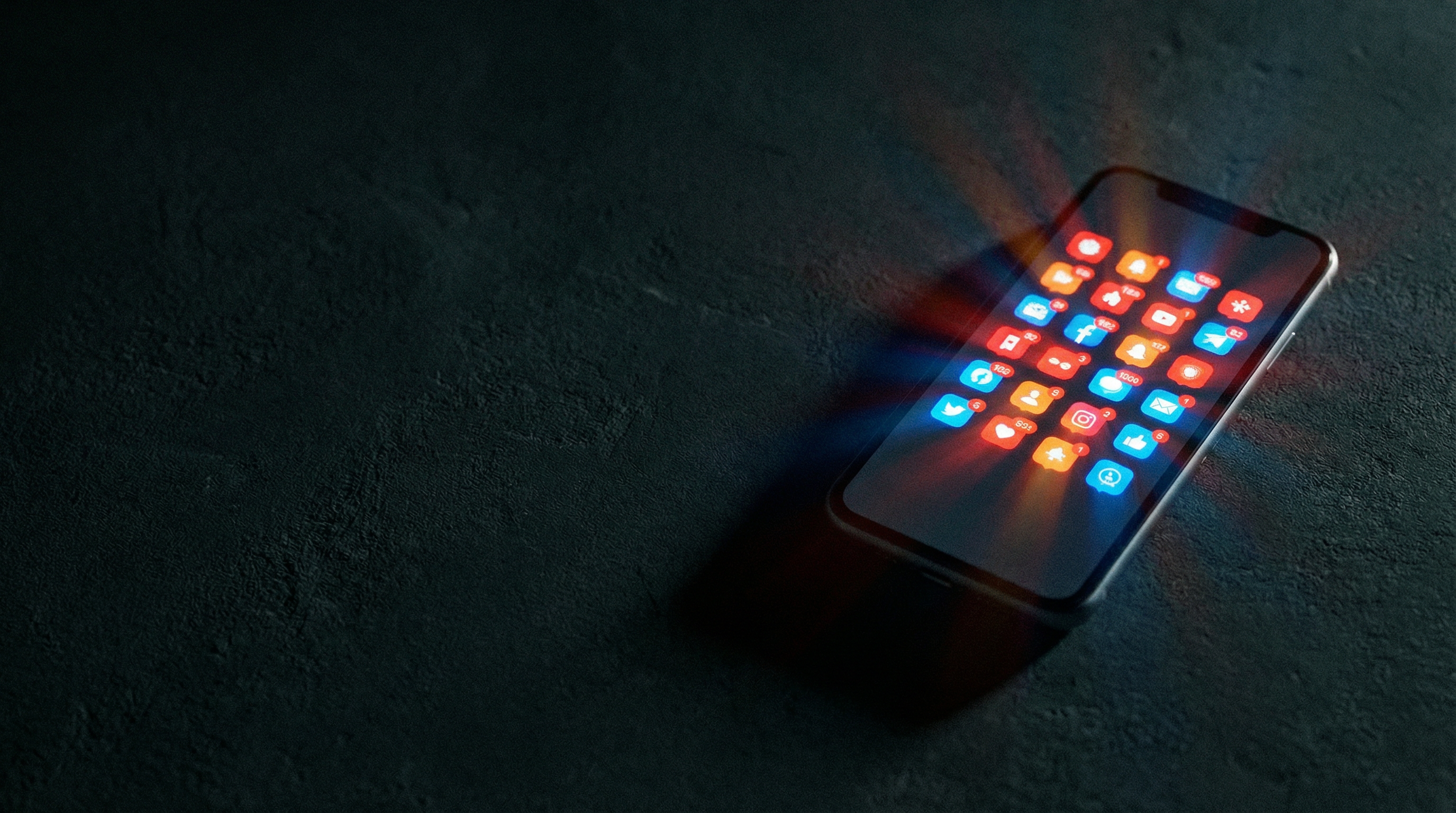
Notifications exploit a fundamental feature of human neurochemistry. The mesolimbic dopamine system — the brain's primary reward and motivation pathway — fires not in response to rewards themselves, but in anticipation of potential rewards. The uncertainty is the key ingredient. When you hear a notification sound, your dopamine system fires in response to the possibility that something important, pleasurable, or socially relevant has arrived.
This is the variable-ratio reinforcement schedule — the same mechanism that makes slot machines maximally addictive. Sometimes the notification is a message from someone you care about. Sometimes it's a promotional email. The unpredictability is neurologically identical to pulling a lever and sometimes getting a coin. The dopamine spike happens regardless of which it turns out to be, because it happens at the moment of uncertain anticipation, not at the moment of outcome.
Tolerance and Escalation
Like any repeated dopamine stimulus, the notification loop produces neuroadaptation over time. The brain upregulates dopamine receptor sensitivity thresholds, requiring higher or more frequent stimulation to produce the same reward signal. This is why heavy smartphone users often report feeling unable to focus on anything for more than a few minutes before the urge to check arises — not as a moral failure, but as a genuine neurochemical dependency on high-frequency dopamine stimulation.
The corresponding downregulation of dopamine reward from slow-payoff activities — deep reading, sustained creative work, complex analysis — is equally real. Work that demands sustained attention and delivers rewards on long timescales becomes neurochemically uncompetitive with the instant-gratification loop of notification checking. Your brain has been, in a very literal sense, trained to prefer distraction.
Is a Foggy Brain Holding You Back?
Download the free Brain Fog Fix Guide and discover the 12-minute audio technique that thousands use to restore mental clarity — no supplements, no meditation required.
Get the Free Guide →Attention Residue: The Hidden Cost of Every Interruption
Professor Sophie Leroy's research introduced the concept of attention residue to describe what happens after any interruption. When you switch from a task (A) to respond to an interruption (B), your working memory does not cleanly hand off. Part of it remains allocated to task A — processing incomplete sub-goals, rehearsing unfinished reasoning threads, anticipating the need to return. This cognitive residue degrades performance on task B.
Gloria Mark and colleagues at UC Irvine quantified the recovery time: after an interruption, it takes an average of 23 minutes and 15 seconds to return to full engagement with the original task. In a typical office environment with notifications enabled, the average time between interruptions is 3–5 minutes. The mathematics are damning: workers who allow continuous notification access are structurally prevented from ever entering sustained deep focus.
The Zeigarnik effect amplifies this. Incomplete tasks leave stronger cognitive residue than completed ones — the brain's goal-tracking system keeps open loops active in working memory until they are resolved. Each unanswered notification is an open loop. The unchecked inbox is dozens of open loops. The ambient awareness of these unclosed tasks consumes cognitive bandwidth even when you are actively trying to focus on something else.
The Structural Rewiring Problem
The most alarming finding from digital distraction research is not the acute performance cost but the chronic structural effect. Clifford Nass at Stanford found that heavy media multitaskers — people who habitually engaged with multiple digital streams simultaneously — showed measurably impaired attentional filtering capacity compared to light multitaskers. They were worse at ignoring irrelevant information, worse at managing working memory, and worse at switching between tasks quickly and cleanly.
Critically, this impairment was not limited to the times they were multitasking. It persisted during tasks that required focused single-tasking. The chronic distraction habit had structurally degraded the neural circuitry responsible for attentional filtering — the ability to suppress irrelevant inputs and focus on what matters. The very capacity you most need for deep work is atrophied by the habit of distraction.
This structural effect means that the solution is not simply eliminating notifications in the moment of a focus session. Genuine recovery requires extended periods of distraction-free attention — not as a productivity tactic but as neurological rehabilitation of the attentional filtering system. This connects directly to the brain fog patterns explored in our complete brain fog guide: chronic digital overstimulation contributes to the mental cloudiness, difficulty concentrating, and cognitive fragmentation that many people attribute to other causes.
What to Do: The Practical Protocol
Understanding the mechanism points clearly toward the solution. The goal is not to eliminate technology — it is to systematically restore attentional sovereignty.
1. Batch Notifications Into Windows
Turn off all push notifications for email, messaging, and social platforms. Check them at two or three scheduled times per day — for example, 9am, 12pm, and 4pm. Outside those windows, they do not exist. Most emergencies have alternatives (phone calls), and most "urgent" messages can wait two hours without consequence.
2. Physical Device Separation
As discussed in our article on why focus fails, Adrian Ward's research showed that the mere visible presence of a smartphone reduces cognitive capacity even when it is face-down and silent. Physical removal — desk drawer, another room, car — eliminates this ambient pull entirely.
3. Digital Sabbaths
Extended device-free periods — one day per week, or at minimum one evening — allow the dopamine system to downregulate its tolerance to high-frequency stimulation. Cal Newport's "digital minimalism" framework suggests that deliberate multi-day device abstinence, repeated regularly, can meaningfully restore attentional baseline capacity. The first 24–48 hours typically feel uncomfortable — the restlessness and urge to check is the dopamine tolerance asserting itself. By day 3–4, most people report a subjective sense of mental spaciousness they had forgotten was possible.
4. The Passive Audio Reset
For the neurological dimension of the problem — the high-beta, over-aroused, dopamine-depleted attentional state that chronic digital distraction creates — a passive audio reset using theta brainwave entrainment is among the most direct available interventions. By guiding the brain from high-beta back to the theta-alpha state, a 12-minute session provides the neurological opposite of the distraction state: calm, internally focused, DMN-quiet, ready for deep work.
This is particularly useful as a transition ritual between periods of inevitable screen use and periods requiring deep focus — a deliberate neurological decompression that compresses the time needed to shift from reactive digital engagement to generative focused work. The brainwave science behind this approach is explored in our complete brainwave science guide.
Digital distraction is not a discipline problem. It is an engineering problem — your attention has been systematically targeted by sophisticated tools designed to capture and hold it. Recovering it requires equally systematic counter-engineering, not stronger willpower. The good news is that the attentional system is plastic: the structural damage from chronic distraction is reversible with consistent practice, and the neurological capacity for deep focus can be rebuilt.