What Caregiving Does to Your Brain
Here is a fact that most caregivers never hear from a doctor, a parenting book, or a midwife: providing sustained care for another human being produces measurable structural and functional changes in the caregiver’s brain. These are not metaphors. They show up on MRI scans and in blood tests.
The human brain is exquisitely sensitive to chronic stress, and caregiving — even loving, willing, deeply meaningful caregiving — is one of the most sustained forms of stress the brain ever encounters. It combines physical demands, emotional labour, unpredictable sleep disruption, high-stakes decision-making, reduced personal autonomy, and chronic suppression of the individual’s own needs. No other role asks the brain to manage all of these simultaneously for years at a time.
Understanding what is happening neurologically changes the conversation from “I should be coping better” to “my brain is responding predictably to an extraordinary situation.” That shift in framing is not just emotionally helpful — it’s the necessary precondition for choosing the right interventions.
The Cortisol Load
Cortisol is the body’s primary stress hormone, and it serves a vital function in acute stress situations: it sharpens attention, mobilises energy, and suppresses non-essential functions to help you deal with an immediate threat. The problem is that the brain cannot distinguish between a genuine threat and the chronic low-level demands of caregiving. Every time a baby cries in the night, a teenager has a crisis, or an aging parent needs help, the same stress axis activates.
Chronic cortisol elevation — the state that results from perpetual caregiving demands — does several things to the brain that directly explain the cognitive symptoms caregivers report:
- Hippocampal atrophy: The hippocampus, the brain structure responsible for forming new memories and retrieving existing ones, is particularly vulnerable to cortisol. Chronic cortisol exposure has been shown in multiple studies to reduce hippocampal volume — which translates to difficulty forming new memories, retrieval failures, and the particular frustration of forgetting words mid-sentence.
- Prefrontal cortex impairment: The prefrontal cortex handles executive function: planning, decision-making, impulse control, and emotional regulation. High cortisol literally reduces blood flow to this region, impairing the very faculties caregivers rely on most heavily.
- Amygdala hyperactivity: The amygdala, the brain’s alarm system, becomes sensitised under chronic stress, leading to heightened emotional reactivity, increased irritability, and lower emotional thresholds — the state many parents describe as “I snap at small things that I know don’t matter.”
Research from the Archives of Internal Medicine found that dementia caregivers had significantly higher rates of depression, impaired immune function, and worse self-reported cognitive performance than non-caregivers of the same age — effects that persisted for years after caregiving ended.
Is a Foggy Brain Holding You Back?
Download the free Brain Fog Fix Guide and discover the 12-minute audio technique that thousands use to restore mental clarity — no supplements, no meditation required.
Get the Free Guide →Hypervigilance: The System That Never Turns Off
One of the most underappreciated neuroscientific realities of caregiving is hypervigilance — the brain’s persistent threat-scanning state that keeps a caregiver’s nervous system running at elevated activation even when nothing is happening.
Hypervigilance is adaptive: a mother who sleeps lightly so she hears her infant, a parent who keeps one part of their awareness on the children even while working, a daughter who monitors her father’s breathing patterns — these are survival behaviours for the people in their care. But they come at a significant neurological cost to the caregiver.
The brain running in hypervigilant mode is permanently in something close to high-beta brainwave state (15–30 Hz) — the electrical pattern associated with active problem-solving, anxiety, and alert readiness. This is the opposite of the restorative states the brain needs to consolidate memory, regulate emotion, and perform the neurological maintenance required for healthy cognition. For a full explanation of what different brainwave states do to your cognition, our complete brainwave science guide covers this in detail.
The Measurable Cost
In high-beta hypervigilant states, the brain’s default mode network — the system that supports introspection, perspective-taking, and problem-solving when the brain is “off task” — is chronically suppressed. This means caregivers struggle not just with the tasks at hand, but with the background cognitive processing that helps humans make sense of their lives, plan for the future, and maintain a stable sense of self.
This explains why so many caregivers describe a sense of having lost themselves, of not knowing who they are beyond their caring role, and of struggling to think creatively or plan ahead even when given the rare opportunity to do so. These are not personality issues or signs of weakness. They are the measurable consequences of a chronically activated stress response.
See our detailed article on the neuroscience of why moms are always tired for a specific deep-dive into hypervigilance and its effects on maternal exhaustion.
Compassion Fatigue and the Empathy Tax
Compassion fatigue is a phenomenon initially documented in professional caregivers — nurses, social workers, emergency responders — but it affects any person who regularly provides emotional care for others. It is defined as a reduction in the capacity for empathy, connection, and caring that results from sustained exposure to others’ suffering and needs.
Neurologically, compassion fatigue involves changes in the brain’s reward circuitry and empathy networks. The anterior insula and anterior cingulate cortex — regions that process empathy and emotional attunement — show altered activation patterns in people experiencing compassion fatigue. The brain’s dopaminergic reward system, which normally makes caring feel meaningful and motivating, becomes dysregulated.
The subjective experience is distinct from ordinary exhaustion. Caregivers with compassion fatigue often report:
- Emotional numbness or detachment from the people they care for
- Feeling like they are going through the motions without genuine connection
- Intrusive thoughts or resentment that they feel deeply ashamed of
- A sense of hopelessness about their situation or the future
- Reduced ability to take pleasure in things that normally provide joy
These symptoms are not moral failures. They are predictable neurological consequences of sustained empathic engagement without adequate recovery. Our in-depth article on what compassion fatigue does to the brain covers the neuroscience and recovery options in full, including guidance specifically for nurses, social workers, and professional caregivers.
Decision Fatigue: The Hidden Cost of Running a Family
The research on decision fatigue demonstrates that the prefrontal cortex — responsible for deliberate, effortful decision-making — has a finite daily capacity. Once that capacity is depleted, decision quality declines measurably: choices become more impulsive, more conservative, or are deferred entirely. This is not laziness or poor character; it is a neurological phenomenon that affects judges, surgeons, and parents equally.
The cognitive load of caregiving is extraordinary in its decision density. Research has documented that the average mother makes approximately 35 significant decisions per hour during waking hours with children present — ranging from nutritional choices to safety assessments to interpersonal mediations to logistical coordination. This is before accounting for professional decisions, household management decisions, and the decisions involved in caring for an aging parent.
When the prefrontal cortex is depleted through decision fatigue, emotional regulation suffers first. This is why the well-documented phenomenon of “I held it together all day and then completely lost it over something small in the evening” is so common among caregivers. The prefrontal cortex that normally moderates the amygdala’s emotional responses simply has insufficient resources remaining to do its regulatory job.
For more on the caregiver experience when caring for both children and aging parents simultaneously, see our guide to the sandwich generation brain.
Sleep Deprivation and the Memory Problem
Sleep is when the brain performs the majority of its memory consolidation, cellular repair, toxic waste clearance (via the glymphatic system), and emotional processing. For caregivers, sleep is routinely interrupted, shortened, or of poor quality even when it occurs — because hypervigilance reduces sleep depth even during the hours that are theoretically available.
The cognitive consequences of chronic partial sleep deprivation — the kind that results from caregiving rather than total sleep deprivation — are well documented and severe:
- Slow-wave sleep (the deep restorative stage) is reduced disproportionately, since it typically occurs in the early part of the night and is most disrupted by early awakenings
- Memory consolidation — the overnight transfer of information from short-term to long-term storage — is severely impaired
- Emotional memory becomes dysregulated: negative emotional memories are disproportionately consolidated while positive memories are under-consolidated, contributing to the mood disturbances common in caregivers
- The prefrontal cortex’s ability to regulate emotional responses is markedly reduced after even one night of poor sleep
The caregiver brain fog — the difficulty concentrating, word-finding failures, sense of mental slowness — that many parents describe is, in large part, a sleep deprivation phenomenon compounded by chronic cortisol effects. For a deeper exploration of this pattern and what helps, see our full guide on understanding and treating brain fog.
The Recovery Framework: What Actually Helps
Recovery from caregiver brain fatigue is not about doing more. It is about strategically interrupting the stress cycle at key points to give the nervous system the recovery windows it needs. The following framework is grounded in the neuroscience of stress recovery, adapted for the reality of caregiving time constraints.
Parasympathetic Activation — Your Priority
The autonomic nervous system has two modes: sympathetic (stress response, fight-or-flight) and parasympathetic (rest and digest, recovery). Caregivers live predominantly in sympathetic mode. Recovery begins with deliberately activating the parasympathetic system — not hoping it will happen naturally, but choosing specific interventions that trigger it.
Effective parasympathetic activators include:
- Slow diaphragmatic breathing (4-second inhale, 6-second exhale)
- Progressive muscle relaxation
- Theta brainwave audio entrainment (see next section)
- Cold water face immersion (triggers the dive reflex, immediately activating vagal tone)
- Slow, gentle movement (yoga, walking in nature)
None of these require significant time. The minimum effective dose for measurable cortisol reduction appears to be in the 10–15 minute range, making these interventions genuinely accessible even to the most time-constrained caregiver.
Protecting Sleep Architecture
When total sleep hours are limited by caregiving demands, protecting the quality of available sleep becomes critical. Strategies supported by sleep research include:
- Consistent sleep and wake times even on disrupted nights (anchor the circadian rhythm)
- Eliminating caffeine after 12pm (caffeine has a half-life of 5–7 hours and disrupts slow-wave sleep even when it doesn’t prevent sleep onset)
- Using a wind-down audio protocol in the 20–30 minutes before sleep to reduce cortisol and shift the brain toward restorative theta states
- Brief daytime naps of 10–20 minutes (avoiding longer naps that enter slow-wave sleep and cause sleep inertia)
Reducing Cognitive Load
Since decision fatigue is a major component of caregiver brain fatigue, systematically reducing unnecessary decisions conserves prefrontal cortex capacity for the decisions that genuinely matter:
- Meal plan a week at a time and remove daily food decision-making
- Create default routines for morning and evening so they run largely on autopilot
- Use checklists for recurring tasks rather than holding them in working memory
- Delegate decisions that don’t require your specific judgment
- Apply a “good enough” standard to low-stakes decisions rather than optimising them
The 12-Minute Neurological Reset
Among the self-care options available to caregivers, theta brainwave audio entrainment stands out for a specific reason: it works within the time constraints of actual caregiving life. Most genuine recovery tools — meditation, yoga, long baths, extended exercise — require 30 minutes to an hour of uninterrupted time that most caregivers rarely have.
Theta audio works in 12 minutes. It can be done during a nap time, in the car after school drop-off, or in the 15 minutes after bedtime. And the neurological mechanism is direct rather than indirect: instead of hoping to achieve a relaxed brainwave state through gradual technique practice, theta audio uses the brain’s frequency-following response to induce the theta state (4–8 Hz) directly.
In the theta state, the brain’s stress systems measurably down-regulate: cortisol levels drop, the amygdala’s threat response quiets, the parasympathetic nervous system activates, and the default mode network (the system involved in memory consolidation and emotional processing) begins its restorative work. Crucially, the prefrontal cortex function that was impaired by stress begins to recover — often noticeably, within the same session.
This is not fringe science. Theta oscillations are associated with hippocampal memory consolidation, reduced HPA axis activity, and the subjective states of calm alertness that distinguish high-functioning from exhausted caregivers. The academic literature on brainwave entrainment for stress reduction spans decades.
For a complete overview of the science behind theta brainwaves and why they matter for recovery, see our brainwave science pillar page. For a specific guide to self-care that fits within real caregiver schedules, see self-care that takes 12 minutes or less.
The Genius Song
A professionally engineered 12-minute theta brainwave audio program designed to activate the parasympathetic nervous system and reset the exhausted caregiver brain. $39 one-time · Lifetime access · 90-day money-back guarantee via ClickBank.
Click here to try The Genius Song →Affiliate disclosure: This is an affiliate link. I may earn a commission at no extra cost to you.
Long-Term Brain Recovery for Caregivers
Short-term interventions manage the immediate symptoms. Long-term recovery requires a more comprehensive approach that addresses the underlying neurobiology of caregiver burnout.
The Identity Dimension
One of the most under-discussed aspects of caregiver brain fatigue is its impact on identity. When the brain is chronically resourced toward monitoring and responding to others’ needs, the neural networks involved in self-referential processing — the part of the brain that maintains a coherent sense of who you are, what you value, and what matters to you — are consistently under-activated.
This is why many caregivers — particularly long-term parents and those in the sandwich generation caring for both children and parents — describe a profound sense of having lost themselves. This is not a psychological weakness. It is a neurological consequence of resource allocation: the brain has been routing its energy elsewhere for years.
Recovery involves deliberately reactivating these self-referential networks through activities that are genuinely self-chosen: creative pursuits, learning for its own sake, physical activities that are chosen for enjoyment rather than fitness metrics, and social connections that are reciprocal rather than one-directional.
When to Seek Professional Support
Caregiver brain fatigue exists on a spectrum. At its most severe, it merges into clinical depression, anxiety disorders, and post-traumatic stress responses that genuinely require professional mental health intervention. The following signs suggest that professional support is warranted in addition to self-care:
- Persistent low mood or anhedonia (inability to feel pleasure) lasting more than two weeks
- Intrusive thoughts about self-harm or harm to the person being cared for
- Significant dissociation from daily life or from the people around you
- Physical symptoms such as chest tightness, panic attacks, or severe insomnia
- Complete inability to manage daily tasks even with support
These are not signs of failure. They are signs that the brain has reached the limit of what self-directed recovery can address, and that it needs additional support. Please speak with a GP or mental health professional if you recognise these patterns.
Rebuilding Cognitive Function
The brain is neuroplastic — it continues to be capable of structural and functional recovery throughout life. Hippocampal volume can be partially restored through aerobic exercise. Prefrontal cortex function recovers with improved sleep. Emotional regulation improves when the amygdala is no longer perpetually activated by stress. The cognitive changes of caregiver fatigue are not permanent.
But recovery requires giving the brain what it needs: reduced cortisol load, restored sleep architecture, periodic activation of restorative brainwave states, and a genuine reduction in the demands being placed on it. The strategies outlined in this guide — combined with the specific tools covered in our cluster articles on mom brain, resetting after a hard day, and compassion fatigue — form a coherent recovery framework.
You deserve a brain that works. The science says it can be restored. The question is not whether recovery is possible; it is whether you have the tools to make it happen within the real constraints of your life.
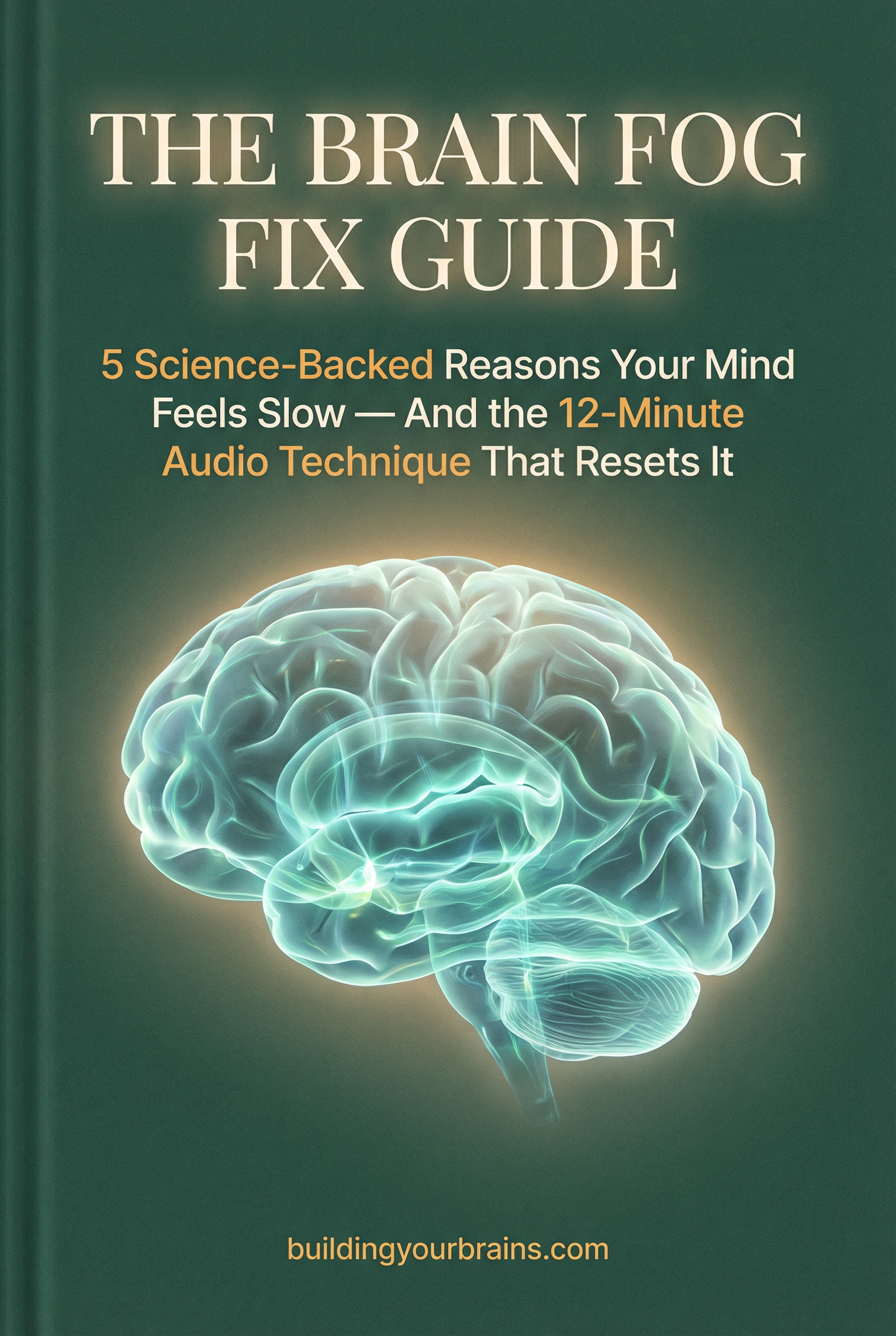
Free Resource: The Brain Fog Fix Guide
A free PDF covering the 5 science-backed reasons your mind feels cloudy — and the simple audio technique that resets it. Written specifically for anyone running on empty.
Download the Free Guide →Frequently Asked Questions
Why do caregivers feel mentally exhausted all the time?
Caregivers experience chronic neurological activation from hypervigilance, decision fatigue, and compassion fatigue simultaneously. The brain never fully leaves its threat-scanning state, keeping cortisol elevated and depleting the neurotransmitters needed for clear thinking and emotional regulation. This is a physiological state, not a personal failing.
What is caregiver brain fog?
Caregiver brain fog is cognitive impairment caused by chronic stress, sleep deprivation, and emotional labour. It presents as difficulty concentrating, word-finding problems, memory lapses, and slowed thinking — all measurable neurological effects of sustained cortisol elevation and sleep disruption. The complete brain fog guide covers diagnosis and treatment comprehensively.
Is mom brain a real neurological condition?
Yes. Postpartum neurological changes include grey matter reallocation to social cognition networks, oxytocin-driven hypervigilance, and structural hippocampal changes from sleep deprivation. These are measurable on brain imaging and are the subject of active research. See our dedicated article on the neuroscience of mom brain for the full science.
How can a caregiver recover brain function?
Recovery requires activating the parasympathetic nervous system deliberately. Short-burst interventions that shift the brain from high-beta stress states to theta and alpha states — such as theta audio, diaphragmatic breathing, or brief mindfulness — are the most accessible starting points for time-constrained caregivers.
What is the quickest self-care a busy caregiver can do?
A 12-minute theta brainwave audio session is one of the most time-efficient neurologically valid self-care interventions available. It can be done during a nap time, a school run wait, or after bedtime. For five options under 12 minutes with the science behind each, see our quick self-care guide.