What Is Brain Biohacking (and What It Isn't)
The word "biohacking" has been hijacked by supplement companies selling $200-a-month stacks and gadget manufacturers promising that their $3,000 EEG headset will unlock your genius. That's not what this guide is about.
Real brain biohacking is grounded in two decades of serious neuroscience research on neuroplasticity, brainwave states, metabolic flexibility, and autonomic nervous system regulation. It's the application of what labs at Stanford, MIT, and Harvard Medical School have been publishing for years — applied systematically, with real feedback mechanisms, to your actual cognitive performance.
The evidence-based stack breaks down into six tiers, ordered by their magnitude of effect on daily cognitive function:
- Tier 1 — Sleep optimization: The largest single lever for cognitive performance. Non-negotiable.
- Tier 2 — Brainwave entrainment: The fastest way to actively shift brain state. Measurable within one session.
- Tier 3 — Cold exposure: Norepinephrine release, BDNF boost, immediate alertness.
- Tier 4 — Intermittent fasting: Ketosis, autophagy, and sustained BDNF elevation.
- Tier 5 — HRV training: The objective readout of nervous system quality.
- Tier 6 — Targeted supplements: The finishing layer after behaviors are locked in.
Notice that supplements come last. This is intentional and important. The most expensive nootropic stack in the world will underperform relative to consistent sleep and a 12-minute brainwave session. Behavioral interventions change the underlying operating system; supplements merely tweak parameters within a fixed system.
This guide is for people who want real, durable improvements in cognitive performance — not a temporary stimulant boost that crashes by 3pm. If you want a deeper look at focus optimization strategies or the science behind brainwave states, those guides cover those topics comprehensively.
Is a Foggy Brain Holding You Back?
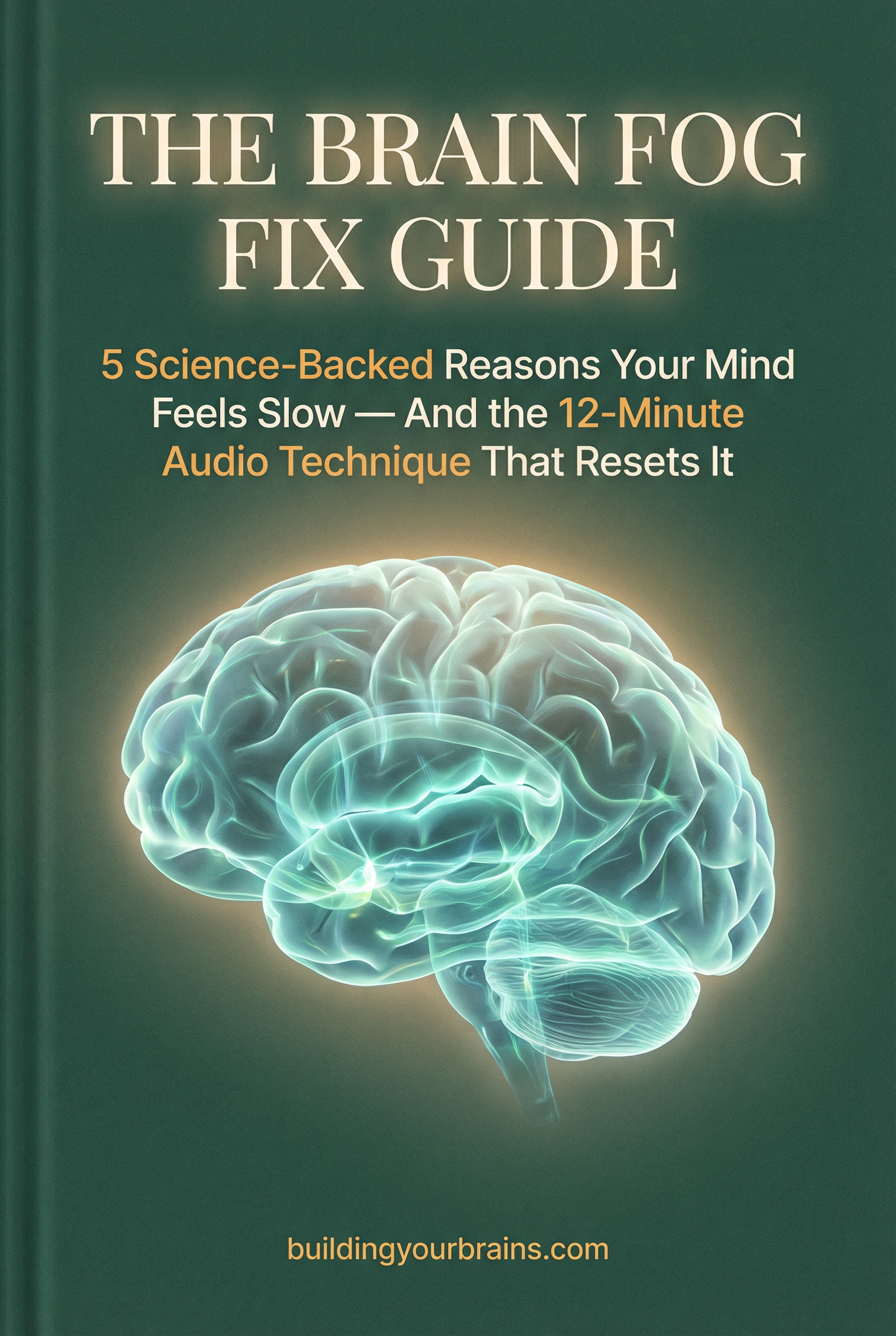
Download the free Brain Fog Fix Guide and discover the 12-minute audio technique that thousands use to restore mental clarity — no supplements, no meditation required.
Get the Free Guide →Tier 1: Sleep Optimization — The Foundation Everything Else Sits On
No amount of coffee, cold showers, or expensive supplements compensates for inadequate sleep. Matthew Walker's research at UC Berkeley, along with dozens of corroborating studies, has established that sleep deprivation produces cognitive deficits equivalent to legal intoxication — and that the vast majority of people operating on 6 hours believe they're performing normally when objective tests show 20–30% degradation across all cognitive domains.
The Sleep Architecture That Actually Matters for Cognition
Sleep isn't a single state. It cycles through five stages across the night, and each stage serves different cognitive functions:
- N1 and N2 (light sleep): Consolidation of procedural memories and motor skills. The spindles that characterize N2 are directly involved in memory transfer from hippocampus to cortex.
- N3 (slow-wave sleep): Physical restoration, growth hormone release, and the bulk of declarative memory consolidation. This is where information from the day becomes durable long-term memory.
- REM sleep: Emotional memory processing, creative connection-making, and integration of new knowledge with existing schemas. REM deprivation specifically impairs creativity, emotional regulation, and novel problem-solving.
The critical insight is that these stages are not uniformly distributed through the night. N3 slow-wave sleep dominates the first half of the night; REM dominates the second half. Cutting sleep by two hours — from 8 to 6 hours — disproportionately eliminates the final REM cycles, which happen to be the ones most critical for creative thinking and learning consolidation.
Practical Sleep Optimization Protocol
The research converges on a handful of high-leverage interventions:
- Consistent wake time above all else. Your brain's circadian clock is anchored to wake time, not bedtime. A fixed wake time (±20 minutes) seven days a week is the single most powerful sleep quality lever available.
- Temperature: Core body temperature must drop 1–3°F to initiate and maintain deep sleep. A bedroom at 65–68°F (18–20°C) dramatically improves N3 duration. A warm shower or bath 1–2 hours before bed paradoxically helps by accelerating the temperature drop afterward.
- Light management: Bright light in the morning (ideally outdoor, within 30 minutes of waking) sets your cortisol awakening response and anchors circadian timing. Blue-spectrum light in the evening delays melatonin onset by up to 3 hours — orange-tinted glasses from 9pm onward are a legitimate biohack.
- Caffeine cutoff: Caffeine's half-life is 5–7 hours. A 2pm cutoff ensures it's largely cleared by midnight. Most people underestimate how much residual caffeine degrades N3 sleep quality even when subjective sleep onset feels normal.
The Brainwave Connection to Sleep Quality
One of the most underappreciated sleep biohacks is using brainwave entrainment to accelerate the transition into slow-wave sleep. Theta waves (4–8 Hz) dominate the hypnagogic state — the period between wakefulness and sleep — and research at the University of Lübeck has shown that inducing theta oscillations before sleep enhances N3 slow-wave activity and subsequent memory consolidation. This is one of several reasons that brainwave entrainment sits at Tier 2 in the stack rather than buried at the bottom.
Tier 2: Brainwave Entrainment — The Neurological Multiplier
Of all the tools in the brain biohacking arsenal, brainwave entrainment is the one that most consistently surprises skeptics — because the mechanism is genuine, replicable, and measurable on an EEG.
The brain is an electrical organ. Neurons communicate via synchronized electrical oscillations, and these oscillations organize into distinct frequency bands that correlate with different cognitive and physiological states:
- Delta (0.5–4 Hz): Deep sleep, physical restoration, growth hormone release.
- Theta (4–8 Hz): Hypnagogic states, deep meditation, creativity, memory encoding, long-term potentiation.
- Alpha (8–13 Hz): Relaxed alertness, calm focus, mental readiness.
- Beta (13–30 Hz): Active thinking, problem-solving, and — when excessive — anxiety and cognitive overload.
- Gamma (30–100 Hz): High-level information binding, peak cognitive integration, insight states.
Brainwave entrainment works through a phenomenon called the frequency following response (FFR): when the brain is presented with a rhythmic auditory stimulus at a specific frequency, cortical oscillations synchronize to that frequency. The effect is robust, well-replicated, and begins within minutes.
Why Theta Is the Biohacker's Priority Frequency
Of the five brainwave bands, theta (4–8 Hz) produces the most compelling list of cognitive benefits and has the strongest research base for deliberate entrainment:
- Long-term potentiation (LTP): LTP is the cellular mechanism of memory formation — the strengthening of synaptic connections that makes learning permanent. LTP is most readily induced during theta oscillations. This is why studying while in a calm, slightly drowsy state often produces better retention than anxious, caffeinated cramming.
- BDNF release: Brain-Derived Neurotrophic Factor — the protein responsible for neuroplasticity and synaptic growth — is upregulated during theta activity. If you want to understand BDNF's role in depth, this article on BDNF covers it comprehensively.
- Creative incubation: EEG studies consistently show theta dominance in the moments before breakthrough insights — the "aha" phenomena. Einstein, Mozart, and Edison all reportedly used hypnagogic (theta) states deliberately for creative problem-solving.
- Cortisol suppression: Theta states are neurologically incompatible with high cortisol. Even 12 minutes of theta entrainment measurably reduces salivary cortisol, which translates directly into cleaner prefrontal cortex function.
How to Use Brainwave Entrainment in Your Stack
The most effective protocol for most people is 12–20 minutes of theta binaural beats (targeting 5–7 Hz) in the morning, immediately after cold exposure. At this point in your morning, cortisol is naturally elevated from the awakening response, and the entrainment session redirects that energy into a productive cognitive state rather than background anxiety.
The product I use for this is The Genius Song — a professionally engineered theta entrainment audio that layers binaural beats, isochronic tones, and acoustic music to produce reliable state-shifting in a single session. At $39 one-time (compared to the $80–200/month most people spend on supplements), it's the most cost-effective neurological tool in the stack. Try The Genius Song risk-free — 90-day money-back guarantee.
For deeper context on how different brainwave frequencies compare and which you should prioritize first, read our guide on gamma vs theta vs alpha waves.
Tier 3: Cold Exposure — The Fastest Norepinephrine Hack
Cold exposure is one of the most well-studied biohacking interventions, and it works through mechanisms that are genuinely distinct from everything else in the stack. Understanding those mechanisms explains both why it works and why it doesn't replace the other tiers.
The Norepinephrine Effect
The most significant cognitive effect of cold exposure is dramatic norepinephrine release. Research by Dr. Rhonda Patrick and others has documented norepinephrine increases of 200–300% following brief cold immersion (57°F / 14°C for 2–3 minutes). Norepinephrine is the neurotransmitter that governs focused attention — it's the same chemical that ADHD medications like Strattera target. A cold shower is a non-pharmacological way to flood your system with it in about 90 seconds.
The subjective experience is immediate: mental cobwebs clear, physical alertness spikes, and the motivation to begin cognitive work feels markedly higher. For people who find mornings difficult, cold exposure can compress the delta-to-beta brainwave transition that normally takes 45–90 minutes into under 5 minutes.
BDNF and Neuroplasticity Effects
Cold exposure also triggers BDNF release through a different pathway than exercise or theta entrainment — via norepinephrine's action on the cortex. While the BDNF boost from a single cold shower is smaller than from sustained aerobic exercise, it's additive. When you stack cold exposure with theta entrainment on the same morning, you get BDNF from two independent pathways simultaneously.
The Anti-Inflammatory Benefit
Neuroinflammation is a significant driver of brain fog, reduced processing speed, and impaired working memory. Cold water immersion activates anti-inflammatory pathways via NF-κB suppression and adiponectin release. Regular cold exposure practitioners typically report that the cumulative anti-inflammatory effect — felt over 3–4 weeks — is subjectively more noticeable than the acute alertness benefit.
Protocol Recommendations
Start with 30 seconds of cold at the end of a normal shower. Work up to 2–3 full minutes of cold, targeting the back of the neck and upper back where thermoreceptor density is highest. Cold plunges (55–60°F / 13–15°C) produce larger norepinephrine spikes than cold showers but aren't necessary for significant effect.
For a detailed comparison of cold exposure versus binaural beats as standalone biohacks, see our head-to-head comparison.
Tier 4: Intermittent Fasting — Ketones, BDNF, and Autophagy
Intermittent fasting (IF) has attracted enormous research attention over the past decade, and the cognitive benefits are among the most interesting findings to emerge from that research — largely because the mechanisms are distinct from what most people expect.
The Ketone Fuel Switch
After approximately 12–14 hours of fasting, liver glycogen depletes and the body begins producing ketone bodies (primarily beta-hydroxybutyrate) from fatty acids. The brain can run on ketones as an alternative fuel to glucose, and it does so with notable efficiency advantages: ketones produce more ATP per oxygen molecule than glucose, generate less reactive oxygen species, and don't produce the post-meal insulin spike that contributes to post-lunch cognitive sluggishness.
Many practitioners report that their sharpest cognitive hours occur during the fasted state — typically hours 14–18 of a fast. This corresponds to the period when ketone production is well-established but the body hasn't yet entered a more aggressive catabolic state that can generate mental fatigue.
BDNF Elevation
Fasting is one of the most reliably documented stimuli for BDNF production. Animal research has shown BDNF increases of 50–400% with caloric restriction and intermittent fasting, with human studies confirming measurable BDNF elevation following 24-hour fasts. The 16:8 protocol (16 hours fasted, 8-hour eating window) appears to produce consistent BDNF elevation over 8–12 weeks of consistent practice.
For more on BDNF and why it matters, the complete BDNF guide covers all the pathways in detail.
Autophagy: The Brain's Cellular Maintenance Mode
Autophagy — the process by which cells break down and recycle damaged proteins and organelles — is activated significantly after roughly 16 hours of fasting. For the brain, autophagy is the mechanism by which misfolded proteins (including amyloid precursors) are cleared before they can accumulate. It's the brain's equivalent of overnight cellular maintenance, and it's something our glucose-abundant modern diet largely suppresses.
The cognitive implications of robust autophagy are subtle over a single day but dramatic over months: cleaner neuronal function, reduced neuroinflammation, and slower accumulation of the cellular debris associated with cognitive aging.
The 16:8 Protocol for Cognitive Performance
The most practical IF approach for cognitive biohacking is 16:8: stop eating by 8pm, skip breakfast, and begin your eating window around noon. This allows you to spend your most cognitively demanding morning hours in the fasted (partially ketotic) state, then fuel up before afternoon demands.
Pair IF with the nootropics guide for a complete picture of how supplementation interacts with fasting protocols — some supplements are more effective taken in the fasted state; others require food for absorption.
Tier 5: HRV Training — Reading Your Brain's Readiness
Heart rate variability (HRV) is one of the most powerful and underutilized tools in the biohacker's toolkit — not because it directly improves cognition, but because it provides an objective measurement of whether your nervous system is in a state that supports high cognitive performance.
What HRV Actually Measures
HRV measures the variation in time intervals between successive heartbeats. Counterintuitively, higher variability is better: a heart that beats with perfectly machine-like regularity is actually a sign of a stressed, low-adaptability nervous system. High HRV reflects robust parasympathetic (rest-and-digest) tone — the nervous system's capacity to modulate between states rapidly and appropriately.
The cognitive connection is direct: the vagus nerve — which drives parasympathetic tone and thus HRV — also innervates the prefrontal cortex via ascending noradrenergic pathways. People with high HRV consistently demonstrate better executive function, working memory, and cognitive flexibility in controlled studies. HRV is essentially a proxy measure of prefrontal cortex quality.
Using HRV as a Daily Cognitive Readiness Score
The practical application is simple. Measure resting morning HRV for 60 seconds before getting out of bed (Polar H10 chest strap plus the Elite HRV app is the gold-standard affordable setup). Establish your personal 30-day baseline.
On days when HRV is 15–20% above your baseline, your nervous system is recovered and primed for high-output cognitive work — schedule your hardest thinking, most important decisions, and creative problem-solving for these days.
On days when HRV is significantly below baseline, your cognitive capacity is measurably limited regardless of how you feel subjectively. Use these days for routine tasks, and double down on recovery protocols (sleep, magnesium, reduced stimulants).
For a complete breakdown of HRV's relationship to brain performance and how theta entrainment specifically improves HRV over time, see HRV and brain performance.
How Brainwave Entrainment Improves HRV
One of the less-discussed benefits of consistent theta entrainment is HRV improvement. By repeatedly training the brain into parasympathetic-dominant theta states, you strengthen the vagal pathways that govern HRV. Regular practitioners typically see measurable HRV increases of 8–15% over 6–8 weeks. This creates a virtuous cycle: better HRV → better prefrontal performance → more effective cognitive biohacking sessions.
Tier 6: Targeted Supplementation — The Finishing Layer
Supplements belong at Tier 6 — last — not because they don't work, but because they work best when behavioral foundations are in place. A $100/month nootropic stack taken by someone sleeping 6 hours, eating three high-glycemic meals per day, and never entering theta states will produce a fraction of the results of the same stack taken by someone with optimized sleep, cold exposure, IF, and brainwave training already running.
With that caveat established, here are the supplements with the strongest evidence base for cognitive enhancement:
Omega-3 Fatty Acids (DHA + EPA)
DHA is a structural component of neuronal membranes — roughly 25% of all brain fat is DHA. Supplementation in deficient individuals produces reliable improvements in memory and processing speed. The evidence for cognitive maintenance in non-deficient individuals is weaker, but the anti-inflammatory effects of EPA make high-quality fish oil (2–3g per day, combined DHA + EPA) one of the most evidence-backed baseline supplements.
Lion's Mane Mushroom
Lion's mane (Hericium erinaceus) contains two unique compounds — hericenones and erinacines — that cross the blood-brain barrier and stimulate NGF (nerve growth factor) production. NGF is to myelination and neurite growth what BDNF is to synaptic plasticity. Human trials, including a 2009 study in Phytotherapy Research, showed significant cognitive improvements in adults with mild cognitive impairment over 16 weeks.
Magnesium Glycinate or Threonate
Magnesium is a cofactor in over 300 enzymatic reactions, including several involved in glutamate receptor function and NMDA signaling — both central to synaptic plasticity. Magnesium glycinate (for sleep quality) and magnesium-L-threonate (the form that crosses the blood-brain barrier most effectively) both have growing evidence bases for cognitive support. Most Western adults are measurably deficient.
Ashwagandha
Ashwagandha's primary mechanism for cognition is cortisol reduction rather than direct nootropic action. By reducing cortisol (via HPA axis regulation), ashwagandha creates conditions where the prefrontal cortex can function without chronic glucocorticoid suppression. This makes it particularly useful for knowledge workers in high-stress environments. For a full review, see our nootropics guide.
Building Your Full Stack: The 30-Day Protocol
The most common biohacking mistake is trying to implement everything simultaneously. The following protocol introduces each tier in sequence, giving your system time to adapt and allowing you to actually notice the effect of each intervention before adding the next:
Week 1: Sleep Foundation
Set a fixed wake time and hold it for seven consecutive days without exception. Implement temperature and light management. Cut caffeine to before 2pm. Do nothing else. Measure subjective cognitive performance daily on a 1–10 scale.
Week 2: Add Brainwave Entrainment
Begin daily theta entrainment sessions (12–20 minutes, first thing in the morning). Note changes to morning alertness, decision-making quality, and creative output. Most people notice a difference within 3–5 sessions.
Week 3: Add Cold Exposure
Start with 30–60 seconds of cold at the end of each morning shower. Progress toward 2–3 minutes. Notice how it interacts with the entrainment — most people find cold before entrainment produces better results than the reverse.
Week 4: Add Intermittent Fasting
Begin skipping breakfast 4 days per week. Maintain hydration (water, black coffee, plain tea are fine during the fasted window). Notice if your best cognitive hours shift toward the fasted state.
By the end of 30 days, you'll have built the behavioral foundation. Begin HRV tracking in week 3 to establish your baseline for the following month, when you'll use it to guide supplementation timing and cognitive workload scheduling.
The 4 Most Common Biohacking Mistakes
Mistake 1: Supplementing Before Fixing Behaviors
Supplements cannot compensate for poor sleep, chronic stress, or a brain stuck in high-beta. Fix the behavioral stack first. If you're spending more than $30/month on nootropics before your sleep, cold exposure, and entrainment practices are consistent, you're investing in the wrong tier.
Mistake 2: Confusing Stimulation with Enhancement
High-dose caffeine, Adderall, and other stimulants produce cognitive changes that feel like enhancement but are largely stimulation of existing circuits. Real biohacking changes the underlying neural architecture — through BDNF-mediated plasticity, improved myelination, and optimized neurotransmitter recycling — producing durable effects that persist when the intervention stops.
Mistake 3: Neglecting Recovery Metrics
Biohacking without measurement is guessing. HRV is the most accessible objective metric for cognitive readiness. Sleep trackers (Oura Ring, WHOOP) provide data on N3 and REM duration. Regular cognitive testing (Cambridge Brain Sciences offers free tools) tracks actual performance changes. Without data, you're telling stories about effectiveness rather than measuring it.
Mistake 4: Overcomplicating the Protocol
The biohacking industry benefits financially when you believe you need more interventions, not fewer. The reality: consistently excellent sleep + daily theta entrainment + 3x weekly cold exposure + 4-day 16:8 IF protocol delivers 80% of the measurable cognitive benefit available from the entire biohacking landscape. Everything else is marginal optimization.
The morning brain protocol article shows exactly how to sequence these four core interventions in a 60-minute morning routine.
The Neurological Foundation of Your Stack
Every biohacking intervention in this guide works better when your brain is regularly accessing theta states. The Genius Song is a professionally engineered theta entrainment audio that produces measurable brainwave shifts in a single 12-minute session — no meditation experience required, no expensive equipment needed.
Get The Genius Song — $39, 90-Day Guarantee →One-time purchase via ClickBank. 90-day money-back guarantee.
Frequently Asked Questions
What is brain biohacking?
Brain biohacking is the practice of using evidence-based interventions — such as sleep optimization, cold exposure, intermittent fasting, brainwave entrainment, and targeted supplementation — to deliberately improve cognitive performance, mental clarity, memory, and focus beyond what baseline lifestyle provides.
What is the most effective brain biohack?
Sleep optimization consistently produces the largest measurable improvements in cognitive performance of any single intervention. Brainwave entrainment — particularly theta frequency audio — is the most accessible active neurological tool, with effects measurable within a single session.
Does cold exposure actually improve brain function?
Yes. Cold exposure triggers norepinephrine release (up to 300% increase in some studies), which improves attention, focus, and mood. It also increases BDNF, the brain's growth factor. The effect is real but shorter-lived than sustained brainwave training.
How does intermittent fasting affect the brain?
Intermittent fasting triggers mild ketosis, elevates BDNF, and activates autophagy — the cellular cleanup process. Research links 16:8 fasting protocols with improvements in working memory, mental clarity, and reduced neuroinflammation. Most people notice peak cognitive effects between hours 14–18 of a fast.
What is HRV and why do biohackers track it?
Heart rate variability (HRV) measures the variation in time between heartbeats. Higher HRV correlates with stronger vagal tone, better stress resilience, and superior prefrontal cortex performance. Biohackers use HRV as a real-time readout of nervous system recovery and cognitive readiness.
Can you biohack your brain without expensive equipment?
Absolutely. The most powerful brain biohacks — sleep consistency, cold exposure, intermittent fasting, and brainwave audio — require no expensive equipment. A quality pair of headphones and a structured sleep schedule deliver most of the measurable benefit of a $10,000 biohacking setup.
Download the Free Cognitive Performance Guide
Get our complete science-backed PDF guide covering all six tiers of the cognitive optimization stack — including the 30-day implementation protocol, HRV tracking templates, and the morning routine that biohackers use to compress a 2-hour morning into 60 minutes of high-output preparation.
Download the Free Guide →